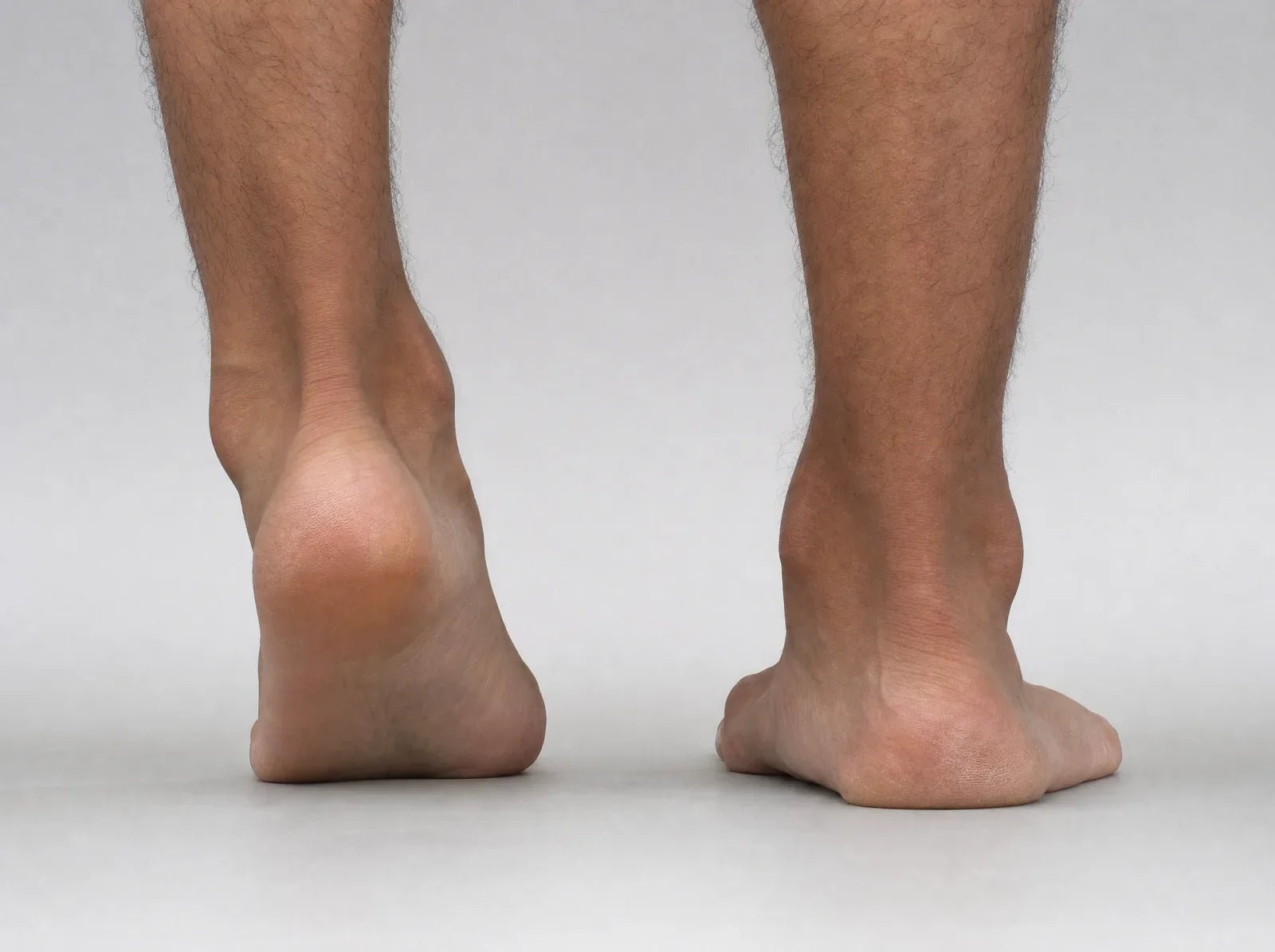
Flat Feet: What They Are and How to Stay Comfortable
A note: SoftySteps insoles are comfort and cushioning products, not medical devices, and are not intended to diagnose, treat, cure, or prevent any condition. This article is general educational information, not medical advice. For persistent foot pain or a diagnosed condition, please consult a qualified healthcare professional.
You might have heard it mentioned at a routine medical check-up or noticed it when looking at your wet footprint — flat feet, or a fallen arch. But is it truly a problem? The honest answer is: it depends. Flat feet affect 20–30% of the global adult population, and while many people live with them symptom-free, for others they trigger a chain reaction of pain and dysfunction that travels far beyond the foot itself.

What Are Flat Feet?
Flat feet (also called fallen arches or pes planus) occur when the arches of the foot collapse, causing the entire sole to make contact — or near-contact — with the ground when standing. In a normal foot, a visible arch runs along the inner edge, distributing body weight and providing springy, shock-absorbing propulsion.
| Feature | Normal Arch | Flat Foot |
|---|---|---|
| Arch height | Visible gap under midfoot | Little to no gap |
| Weight distribution | Balanced across heel, arch, and ball | Concentrated on inner edge |
| Shock absorption | High — arch acts as natural spring | Reduced — harder impact transfer |
| Ankle alignment | Neutral | Often rolls inward (overpronation) |
Types of Flat Feet
Not all flat feet are the same. Understanding the type helps determine the right approach:
- Flexible flat foot: The most common type. The arch appears when the foot is lifted off the ground but disappears under body weight. Usually develops in childhood and may remain symptom-free.
- Rigid flat foot: The arch is absent even when non-weight-bearing. Often related to structural bone issues and more likely to cause pain.
- Adult-acquired flat foot: Develops in adulthood due to posterior tibial tendon dysfunction, injury, or gradual arch collapse. This type tends to be progressive and painful.
Symptoms and Related Problems
When flat feet do cause problems, the symptoms are often initially subtle before becoming disruptive:
- Aching or fatigue in the feet and calves after moderate activity
- Heel pain, particularly plantar fasciitis (affecting 42% of flat-footed adults)
- Ankle pain and increased ankle rolling (sprains)
- Knee pain due to inward tracking of the kneecap
- Hip and lower back discomfort
- Difficulty fitting into standard shoes
"Flat feet are like a domino effect — when the foundation isn't level, everything built on top of it is affected. The foot's collapse triggers compensations all the way up to the spine."
The Full Body Chain Reaction: How Flat Feet Affect Everything
This is the eye-opening reality that most people don't realise. Flat feet are not just a "foot problem" — they initiate a biomechanical cascade that can affect virtually every joint in your body:
| Body Part | Effect of Flat Feet | Common Symptom |
|---|---|---|
| Foot | Arch collapse, overpronation | Heel pain, arch ache |
| Ankle | Inward roll (valgus) | Sprains, chronic instability |
| Calf | Compensatory muscle tension | Tightness, cramps, fatigue |
| Knee | Inward tracking of kneecap (valgus) | Knee pain, patellofemoral syndrome |
| Hip | Internal rotation, abductor weakness | Hip pain, IT band syndrome |
| Lower back | Pelvic tilt, lumbar stress | Chronic low back pain |
| Shoulders | Postural imbalance, one side lower | Shoulder tension, asymmetry |
| Jaw | Full-body postural compensation reaches cervical spine | Jaw misalignment, bite issues (TMJ) |

What Causes Flat Feet in Adults?
Several factors contribute to the development or worsening of flat feet in adulthood:
- Genetics: Family history is the strongest predictor — flat feet run in families
- Obesity: Excess weight places sustained downward pressure on the arch
- Pregnancy: Hormonal changes and increased weight can cause temporary or permanent arch flattening
- Posterior tibial tendon dysfunction: Weakening of the primary arch-supporting tendon
- Footwear history: Years of wearing completely flat shoes with no arch support
- Age-related changes: Tendons and ligaments lose elasticity over time
Everyday Comfort Measures
The good news: flat feet are highly manageable. Here is a structured approach that works:
Step 1 — Arch Support Insoles
An arch support insole helps fill the space under a low arch, supporting the arch and cushioning the foot for added comfort. The SoftySteps 4D Comfort Insole features medial arch support, a deep heel stabiliser, and multi-density cushioning for all-day comfort. Explore our arch support range for options suited to every shoe type.
Step 2 — Strengthening Exercises
Intrinsic foot muscle strengthening (toe curls, towel pickups, single-leg calf raises) helps rebuild the muscular support for the arch. Perform 3 sets of 15 repetitions daily for best results, visible within 6–8 weeks.
Step 3 — Footwear Awareness
Choose shoes with a stable midfoot shank, a slight heel elevation (10–15mm), and a firm heel counter. Avoid completely flat footwear for extended daily wear.
Step 4 — Weight Management
Even a 5–10% reduction in body weight significantly reduces the load placed on the arch and can slow the progression of arch flattening.
Your Foundation Matters
Flat feet are not a life sentence of pain — but they do require attention. The right arch support combined with targeted exercises and smarter footwear choices can restore comfort and support the body chain before it causes discomfort higher up. Begin with the SoftySteps 4D Comfort Insole and feel the difference a properly supported arch makes — from your feet all the way up to your shoulders.